Services · IT Depot & Deploy
IT Depot Services for Enterprise Deployment and Repair
Receive, configure, stage, deploy, support, repair, refresh and recover — the physical half of running an IT estate, performed in our own facilities and recorded against the serial rather than the carton.
Definition
What an IT depot actually is
An IT depot is a physical operation that holds, builds, ships, takes back and repairs your hardware on your behalf — receiving, configuration and imaging, staging, kitting, deployment, break-fix, repair, refresh and recovery — run as one accountable service against one asset record.
The word depot gets used for two very different things. One is a warehouse that stores your equipment and ships it when asked. The other is an operation that changes the state of the asset: it images it, tags it, enrols it, tests it, repairs it, and eventually sanitizes it. Only the second one closes the loop, and the loop is the entire point.
Equipment that goes out has to come back — when it fails, when the user leaves, when the site closes, when the refresh lands. An operation built only for the outbound leg will handle the return leg badly, which is where fleets leak and where most of the recoverable value is lost.
The loop
Eight stages, and the record each one leaves behind
Read it as a circle rather than a line. Stage 08 feeds stage 03: a recovered unit that passes test goes back into ready stock rather than into a skip, and the asset record it carries is the one opened at receiving.
- 01
Receive
Inbound freight, RMA returns and recovered equipment booked in against the asset record rather than against a carton count, on docks sized for trailer volume.
ProducesReceipt against serial - 02
Configure
Imaging, enterprise application load, security baseline, BIOS and firmware, asset tagging and MDM enrolment — applied at build, so the device is under management before it is unboxed.
ProducesBuild record and asset tag - 03
Stage
Configured units held ready against your standard and your forecast, so a new hire, a store opening or a refresh wave draws from stock that is already built rather than starting a procurement cycle.
ProducesReady stock by configuration - 04
Deploy
Kitted, labelled and shipped to the user or the site, with accessories and documentation in the same box. Zero-touch where the platform supports it.
ProducesDelivery confirmation, user assignment - 05
Support
Depot-side dispatch behind your service desk: advance replacement, warranty coordination and the physical half of a ticket your remote team cannot close.
ProducesTicket history per asset - 06
Repair
Diagnosis and component-level repair, including authorized service on HP and Lenovo hardware so warranty entitlement survives the work, with hot-swap for roles that cannot absorb downtime.
ProducesRepair record and parts trail - 07
Refresh
Planned replacement where the outgoing estate is collected as the same movement that delivers the incoming one, rather than as a separate project nobody schedules.
ProducesRefresh wave reconciliation - 08
Recover
Test, grade, refurbish for redeployment or remarket — and where the asset is finished, sanitize to NIST 800-88 and dispose through our R2v3 and RIOS scope.
ProducesErasure certificate, settlement per serial
The distinction that matters
A depot is not a warehouse with a nicer name
A fulfilment operation is organized around the SKU. Thirty identical laptops are thirty units of one line item, and the operation is measured on how quickly they leave the building. That is a perfectly good discipline and it is the wrong one for IT hardware.
A depot is organized around the serial. Those thirty laptops are thirty distinct assets with thirty build records, thirty asset tags, thirty enrolment states and, eventually, thirty erasure certificates. The question a depot has to answer is not did we ship thirty but which one went to whom, built how, and where is it now.
The practical test is simple enough to apply to any provider: ask what happens when a user reports a failed machine. A warehouse ships a replacement and the failed unit becomes somebody else's problem. A depot ships the replacement, tracks the return leg as part of the same transaction, diagnoses the failure, repairs or retires the unit, and closes the record.
If you are currently running this across a stockroom, a reseller and an ITAD vendor, the reconciliation is usually the first useful conversation.
Talk it throughThe building
Depot work needs floor, dock and racking — not just a contract
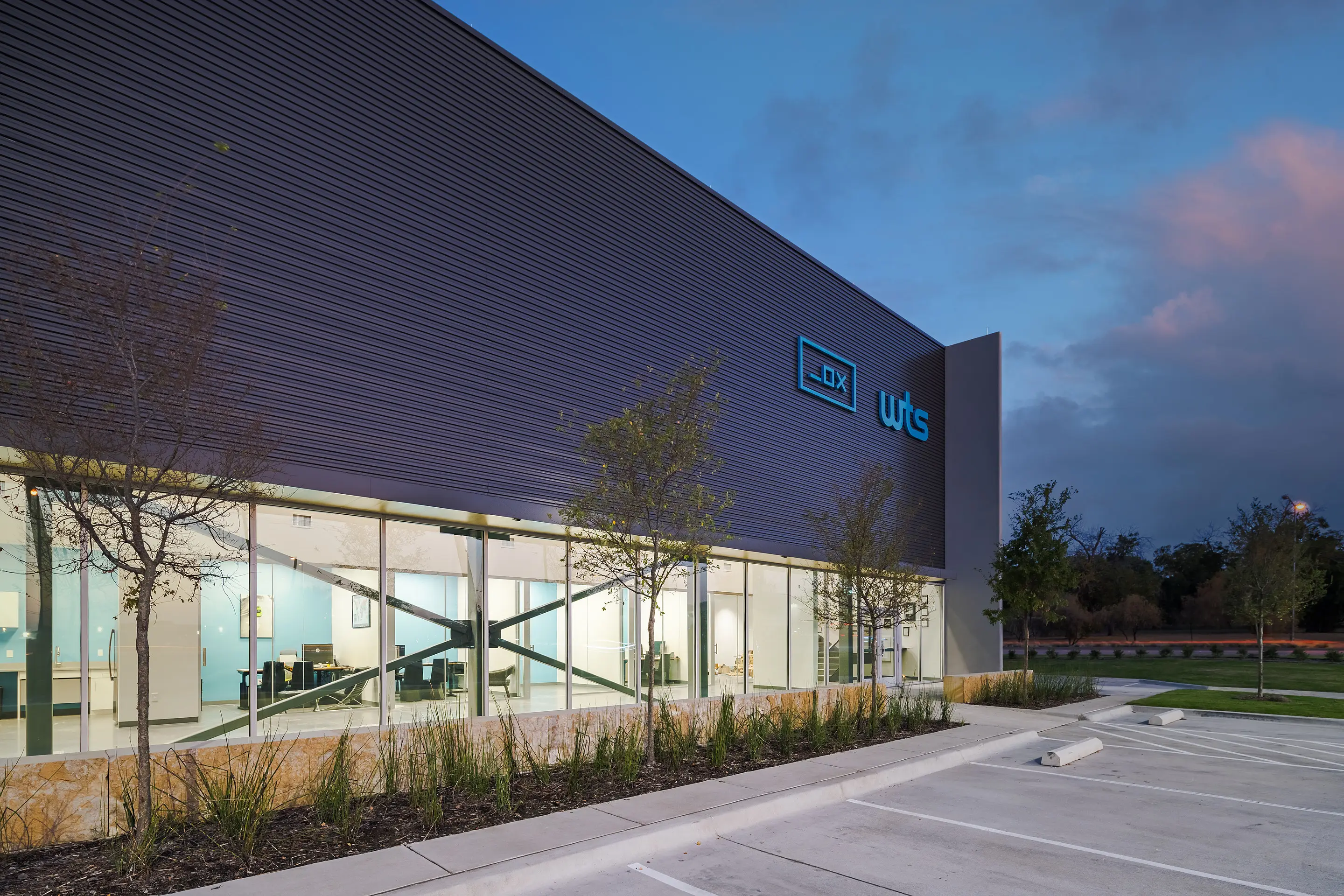
Staging is stock held somewhere. Repair is a bench and a parts store. Deployment is a dock and a carrier. A provider without the physical capacity subcontracts the part you cared about, which is also the part where custody of your equipment changes hands.
- 70,000sq ft
- Secured processing facility
- Lewisville, Texas
- 37,000sq ft
- Warehouse and racking
- Narrow-aisle, high-bay
- 1,500pallets
- Storage capacity
- Climate controlled throughout
- 12,000sq ft
- Mobile device processing
- High-density power delivery
- 10docks
- Operating loading docks
- Supports parallel receiving for multi-trailer projects
- 8:00–7:00
- Receiving and operations window
- An eleven-hour day, so a crew finishing on site in the afternoon still delivers the same day
- Drive-inramp
- Vehicles enter the warehouse
- Loading and unloading happen inside the building, under camera, not on an exterior apron
Depot operations also run from London, Ontario, which is a processing operation with its own docks rather than a consolidation point — so Canadian equipment is received, built, repaired and recorded in Canada. Both sites operate inside our R2v3 and RIOS certified management system, and facility walkthroughs and records reviews are available by appointment.
Repair
Authorized service is what keeps a repair from voiding the asset
Any competent bench can replace a screen. What an unauthorized repair cannot do is preserve the manufacturer's warranty position on the machine afterwards — which turns a routine fix into a decision about whether you are willing to lose the entitlement you already paid for.
We hold HP authorized service provider status and are a Lenovo Authorized Service Provider, so service on that hardware is performed inside the manufacturer's authorization rather than around it. As a Microsoft Authorized Refurbisher we can install genuine, licensed operating systems on refurbished machines, which is what makes a recovered unit fit to go back into the deployment pool rather than out as unlicensed stock.
Stated plainly, because the industry is careless about it: our Dell relationship is a Platinum tier in the Dell Technologies Partner Program. That is a partner-program tier covering sourcing and channel. It is not a service authorization and we do not present it as one.
Capabilities
The specifics that make a depot programme work
Build to your standard, not ours
The image, the application set, the security baseline, the label format and the box contents are your specification. A depot that imposes its own standard is a depot you will be arguing with at every refresh.
Serial-level receiving
Equipment is booked in against the asset, not against a pallet count. That is the difference between knowing thirty units arrived and knowing which thirty.
Configuration held as stock
Staging means built units waiting, held to an agreed level for an agreed set of configurations, so demand is met from the shelf rather than from a purchase order.
Advance replacement
Where the role cannot absorb downtime, the replacement ships before the failed unit is returned, and the return is tracked as part of the same transaction rather than chased afterwards.
Accessories and kitting
Docks, adapters, peripherals, cases and documentation assembled per user profile. Most deployment failures we see are a missing adapter, not a missing laptop.
One record across both directions
Outbound deployment and inbound recovery run against the same asset history, which is what makes a refresh reconcilable instead of two datasets someone joins by hand.
Cross-border execution
Depot work runs from Lewisville, Texas and from London, Ontario, so Canadian equipment is received and processed in Canada rather than moved across the border to be handled.
Components, not only whole units
A machine that is finished as a system is not necessarily finished as parts. Where an estate is being retired alongside equipment that is staying in service, usable memory can sometimes be recovered during processing and fitted into the systems being kept rather than leaving with the lot. Whether that beats remarketing it is assessed per engagement, and recovered components stay identified against the asset they came out of.
Certified end of life in the same building
When an asset stops being worth repairing, it does not need a new vendor, a new pickup or a new record. It moves to sanitization and disposition inside the same scope.
What we are not publishing
The numbers that belong in an agreement, not on a web page
Depot marketing tends to lead with a turnaround figure, a spares model and an integration diagram. We are deliberately not doing that, because those three things are the ones most often quoted generically and then renegotiated once someone looks at the actual estate.
Turnaround, repair depth, stocking levels and the integration mechanism are scoped per engagement and written into the agreement. They depend on your configurations, your volumes, your warranty position, where your users are, and what your systems can actually exchange. A number published without any of that is not a commitment, it is a brochure.
What we will say without qualification: the work is performed in our own facilities, the record is kept against the serial, and the same operation that ships the asset is the one that takes it back.
Send the configuration list and the volumes and we will scope the commitments against them.
Scope a depot programmeWhere this connects
The services either side of the depot
The depot is the operational middle. These are the stages it hands to and receives from.
-
IT & Device Lifecycle Management
The programme-level view: procurement through certified retirement, against one asset record.
-
Reverse Logistics
Getting equipment back from many sites, many employees and many carriers — the inbound leg the depot depends on.
-
Asset Recovery & Remarketing
What a recovered unit is worth once it has been tested and graded, and what determines it.
-
IT Asset Disposition
Sanitization to NIST 800-88 and certified disposition when an asset is genuinely finished.
FAQ
IT depot service questions buyers ask
What is an IT depot service?
How is this different from a 3PL or a fulfilment warehouse?
Can you work behind our existing service desk?
What turnaround do you commit to?
Do you hold spares?
What repairs can you perform in house?
Is WesternTechSystems an authorized Dell service provider?
How does the depot connect to our systems?
Can you operate across US and Canadian sites?
What size programme does this make sense for?
Can we start with one part of the loop?
Start with the return leg.
The outbound half is rarely the problem. Tell us what happens today when a machine fails or a user leaves, and we will scope from there.