
R2v3 & RIOS Certified
IT asset disposition that can prove where every device went
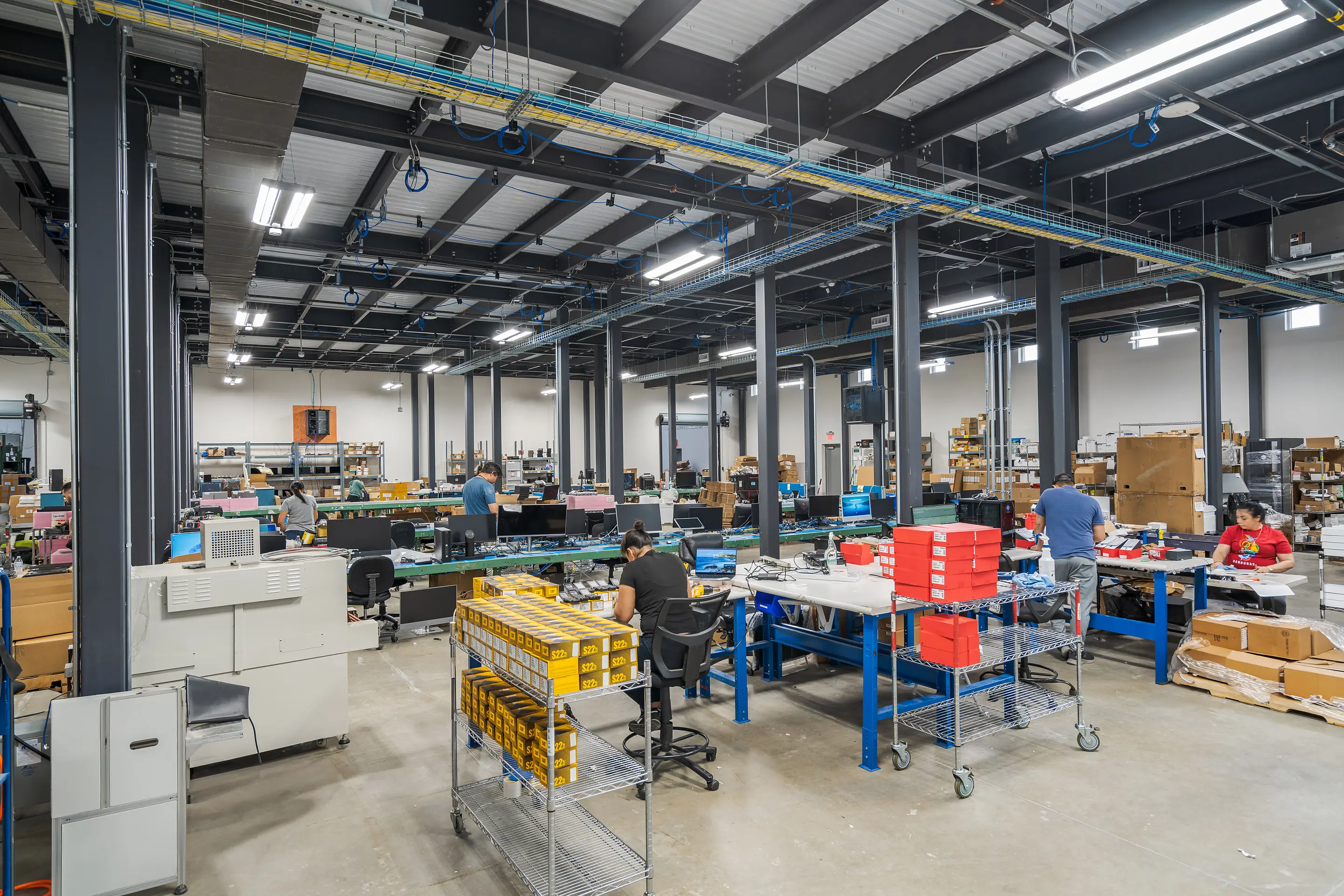
Retiring enterprise hardware creates two liabilities at once: data you must prove is gone, and value you will lose if the assets are handled carelessly. We handle both in the same controlled process, in our own facility.
The problem
Most disposition failures are documentation failures, not shredding failures
Organizations rarely get into trouble because a drive was destroyed badly. They get into trouble because nobody can say, eighteen months later, which drives left the building, who handled them, or what happened to the three that never made it onto the manifest.
That is a records problem, and it is solved at intake — not at the shredder — or earlier still, in the device lifecycle programme that precedes it. If the inventory is serialized on arrival and every stage of handling writes to that record, the audit answers itself. If it isn't, no amount of destruction capability will produce the evidence later.
The same discipline protects your recovery value. Assets with verified provenance and documented condition sell into higher-value channels than assets without.
How it works
Four gates, each producing a record
No device advances to the next stage until the criteria for the current stage are verified and documented. Manual overrides are not permitted.
- 01
Receive & Intake
Your manifest is reconciled against what physically arrives. Every asset is tagged and its legal-hold status confirmed before it moves.
ProducesChain-of-custody receipt - 02
Route & Triage
Devices are classified, matched to the right disposition programme, and released onward only on lead-technician approval.
ProducesRouting assignment log - 03
Sanitize & Verify
Sanitization runs to NIST 800-88. Validation is automatic — a failure quarantines the device with a reason code rather than passing it along.
ProducesPer-device erasure certificate - 04
Recover & Release
Assets are tested, graded and routed to reuse, resale or certified recycling. Nothing ships without a completed disposition record.
ProducesDisposition & carrier manifest
What you receive
A closeout package your auditors accept
- Serialized inventory — Opening inventory reconciled against your manifest at intake, and against final disposition at close.
- Per-device erasure certificates — Serial, method, operator, station, timestamp and validation hash — exportable as JSON or PDF.
- Chain-of-custody records — Timestamped custody transfers from collection through final disposition.
- Asset condition and grading reports — What each device was worth, and why.
- Disposition authorization records — Reuse, resale or certified recycling, recorded per asset.
- Outbound manifests with carrier confirmation — Including downstream recycling manifests where applicable.
Memory recovery & redeployment
Components with remaining life are recovered, not retired with the chassis
A retired server is not a single asset. The chassis reaches end of life on a schedule. The memory inside it frequently has not — and once it leaves the building inside an anonymous lot, whatever life was left in it belongs to somebody else.
Where an organization is retiring equipment and retaining other equipment in the same estate, usable memory can be recovered during processing and redeployed into the systems being kept, rather than sold on as part of the lot. It is the same estate, the same programme and the same provider — the components simply do not leave. Putting them back into service is depot work.
Whether that is the right answer is a technical and commercial judgement, taken per engagement. Generation, density, configuration and the receiving platform all bear on it, and there are plenty of estates where recovered memory is worth more remarketed than redeployed. It is assessed during scoping rather than assumed, and either outcome is a legitimate one.
What makes either possible is that the equipment is already under serialized custody when the decision is made. Components are identified against the asset they came out of rather than becoming untraceable stock — which is the difference between a recovery you can report on and one you cannot.
Where the engagement is structured for that reporting, recovered component value can be traced back to the originating asset at serial level.
FAQ
Questions buyers ask us
What is IT asset disposition, and how is it different from recycling?
How do I know my data is actually gone?
What happens if a drive fails sanitization?
Do you subcontract the work?
Can we audit you?
What are my retired assets actually worth?
What if some assets are under legal hold?
How small a project will you take?
Tell us what is being retired
Approximate quantities, how many sites, and what is driving the timing. None of it has to be exact — an honest estimate with the uncertainty stated is far more useful than a precise-looking number from a register nobody has reconciled.
Tell us what you are retiring.
A single rack, a distributed laptop fleet, or an entire facility. We will scope it, price it, and tell you what it is worth on the way out.