Company · Facility
You can audit a certificate. You should also walk the floor.
Everything below is verifiable in person on two days' notice — which is the only reason it is worth publishing.
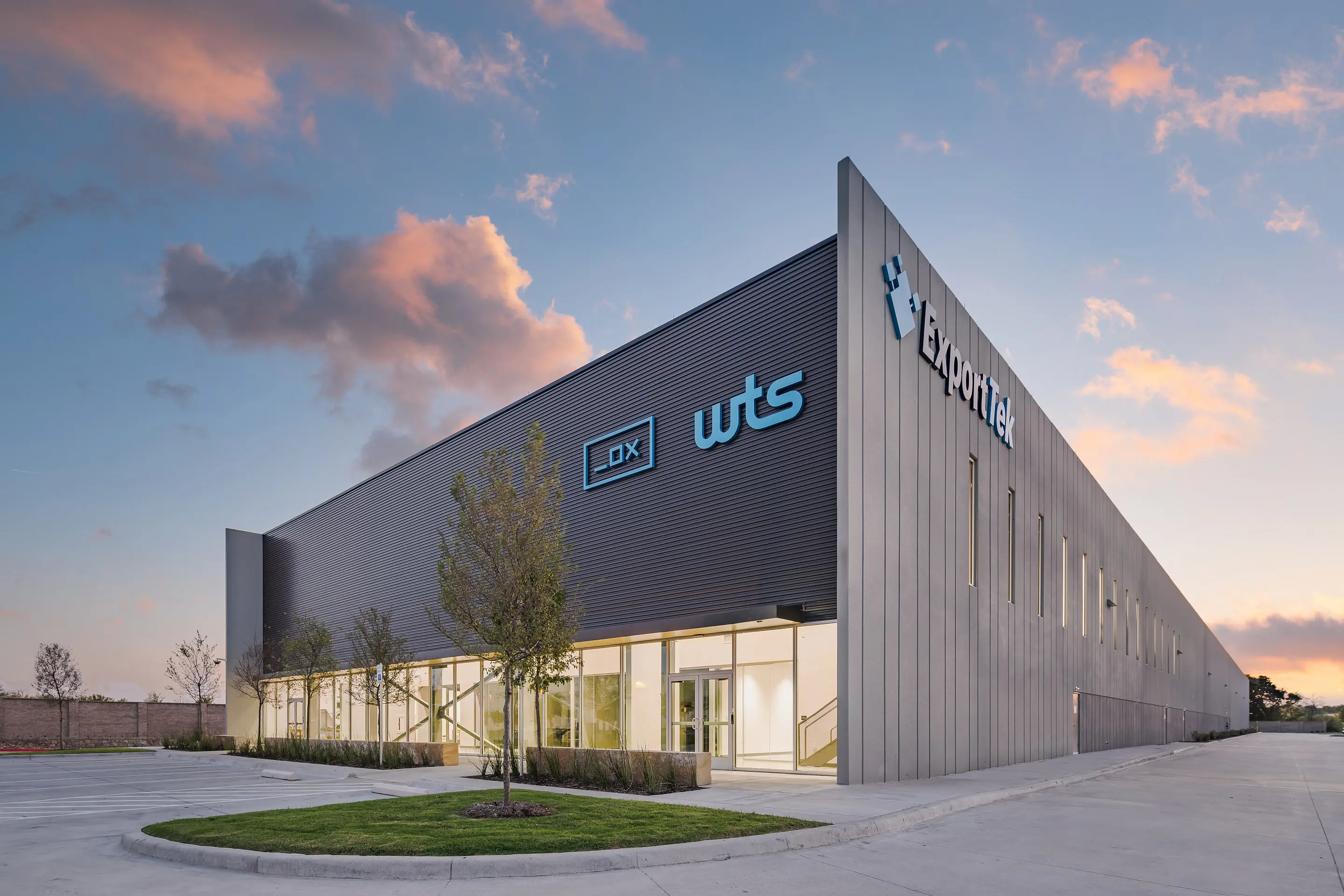
The building
One site, 70,000 square feet, Lewisville, Texas
Our headquarters and processing facility is at 1000 Spinks Road, Suite 100, Lewisville, TX 75067. It is the only place your assets are handled. There is no overflow warehouse and no partner site quietly absorbing volume when a program gets busy.
The layout is organised around how assets actually move — receiving, triage, sanitization, test and grade, then either remarketing or downstream recycling — rather than around what was convenient when the lease was signed.
Capacity
What the square footage is doing
- 70,000sq ft
- Secured processing facility
- Lewisville, Texas
- 37,000sq ft
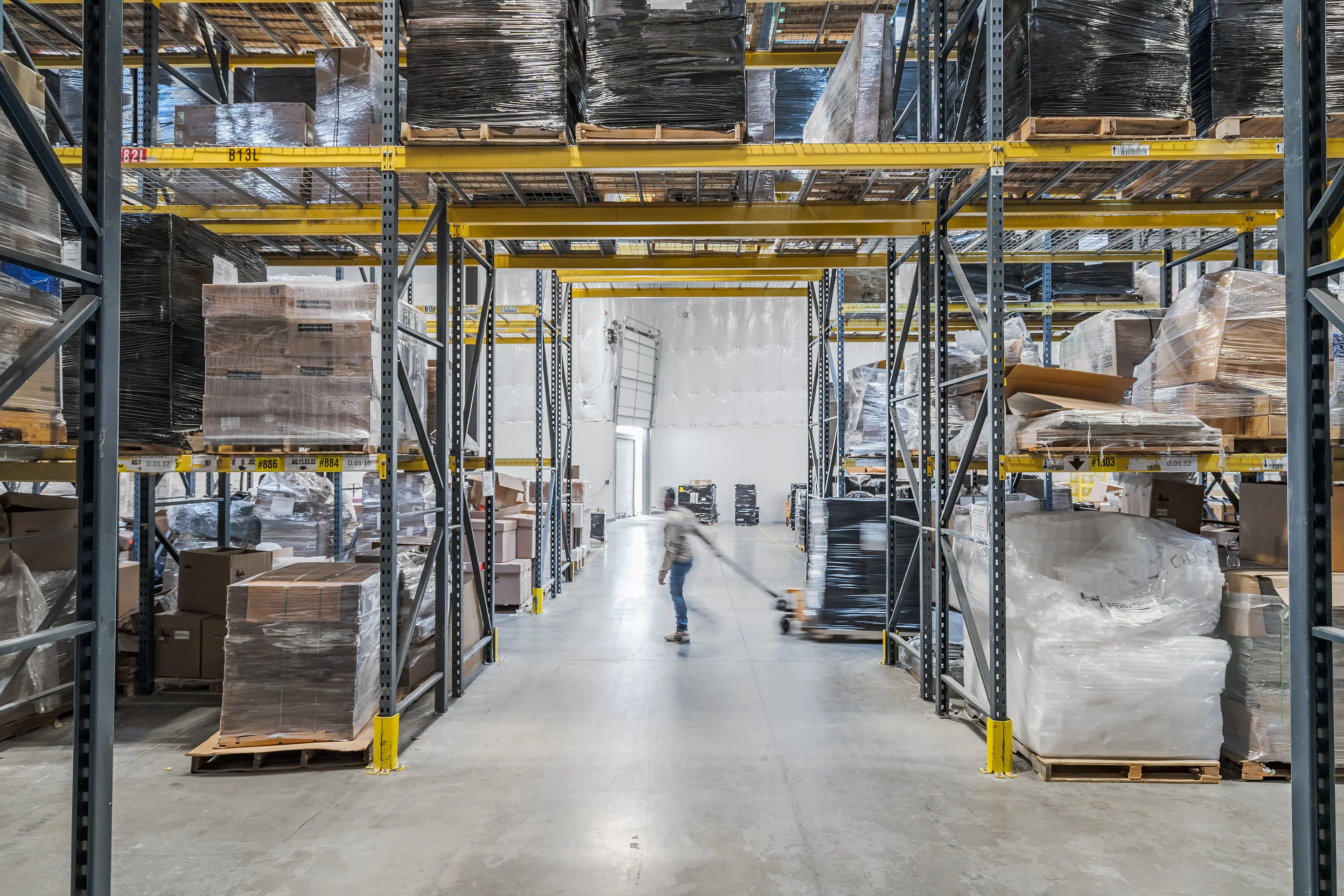
- Warehouse and racking
- Narrow-aisle, high-bay
- 1,500pallets
- Storage capacity
- Climate controlled throughout
- 12,000sq ft
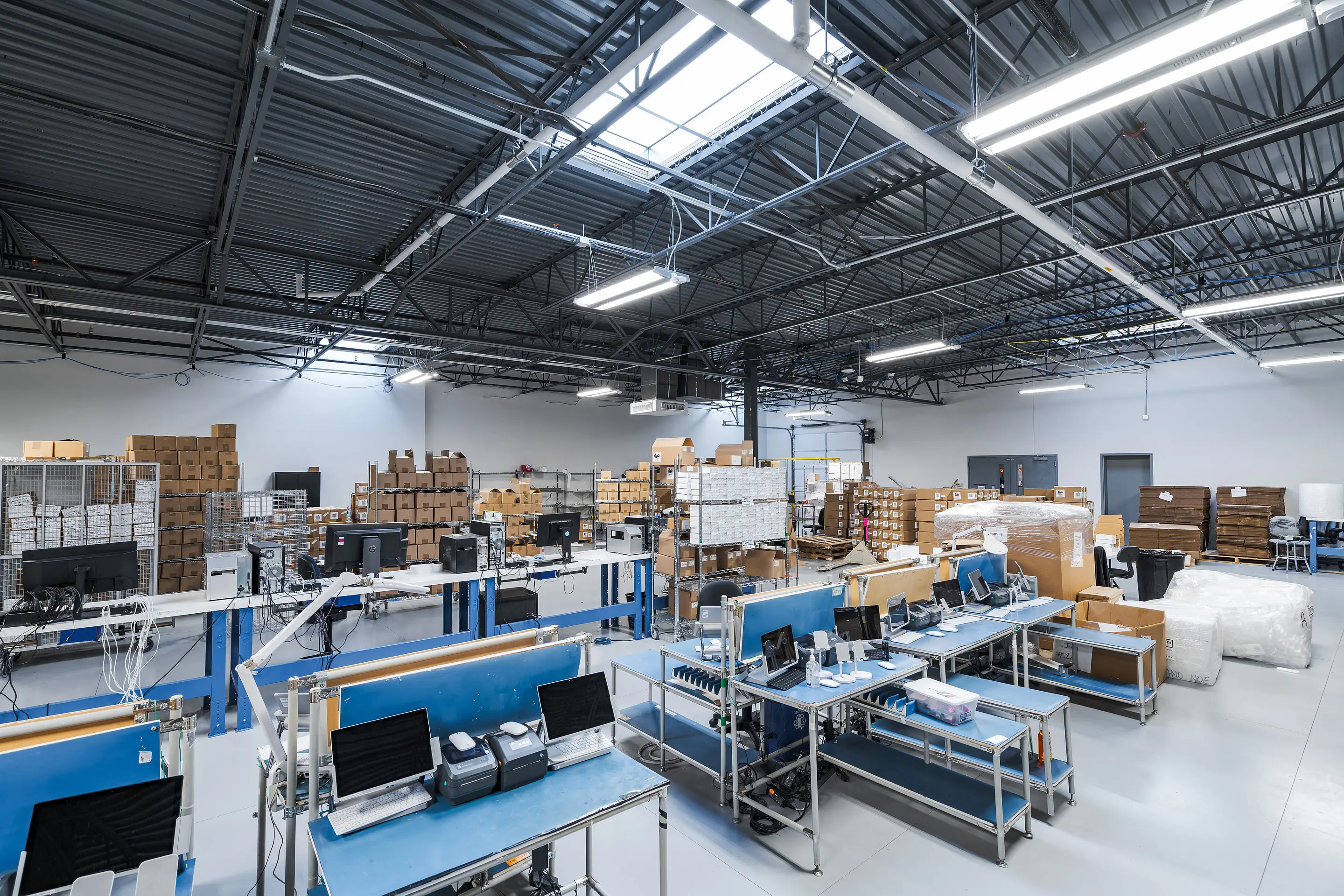
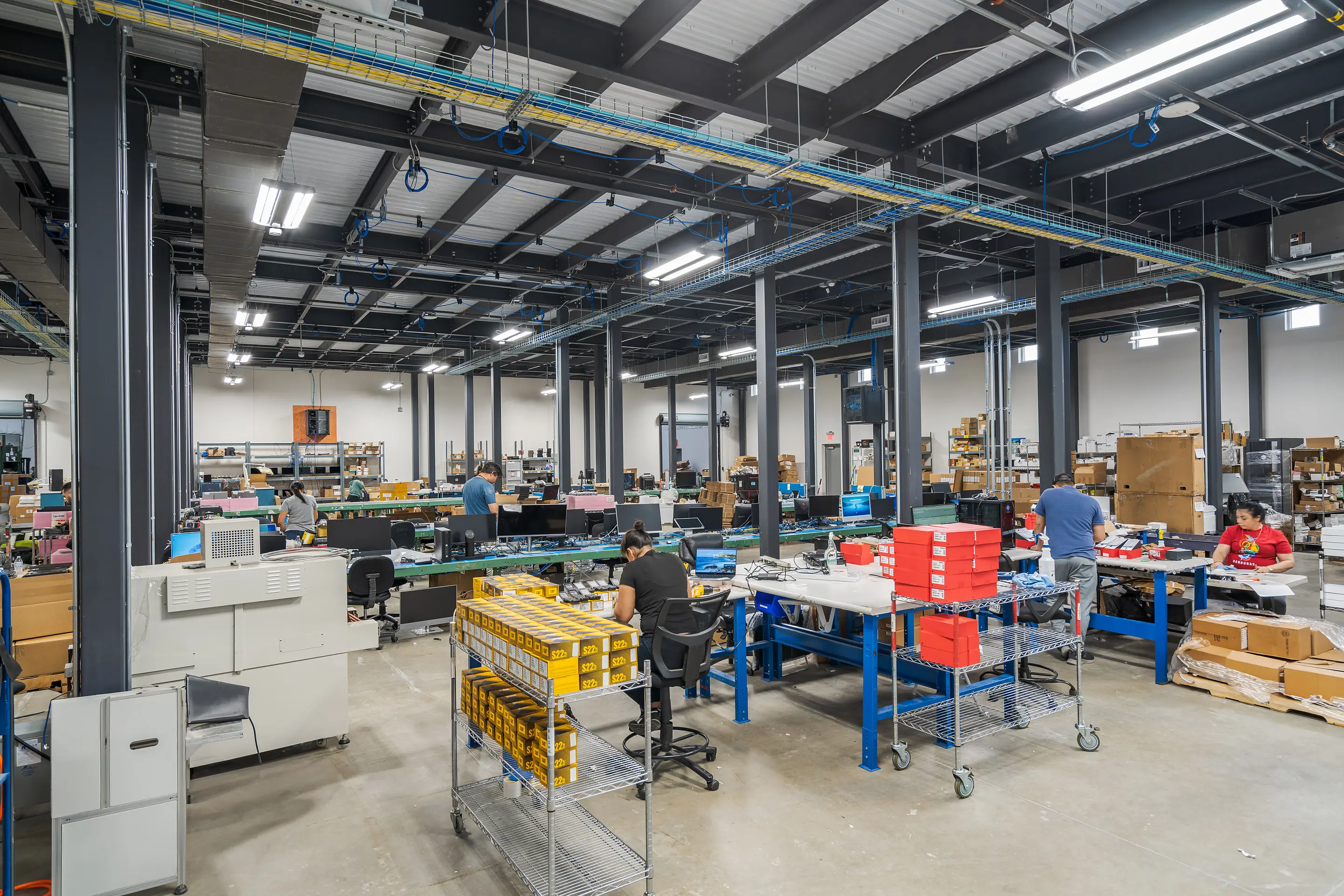
- Mobile device processing
- High-density power delivery
Intake reconciliation, triage, sanitization and functional testing. Workstations are mounted on modular rolling carts, so a zone can be reconfigured for a specific program within a single shift.
Pre-wired for high-density power delivery, so hundreds of handsets and tablets can be charged simultaneously without improvised cable management. Charge state matters: sanitization tools require a minimum charge to complete a verified wipe cycle.
Narrow-aisle forklifts and high-bay vertical racking hold approximately 1,500 pallets — a density that would need considerably more floor area in a conventional warehouse layout.
Upper floor, badged separately from the production floor. Administrative staff do not hold production-floor access by default.
Security architecture
Physical control is where custody is actually kept
A chain of custody is only as good as the building it runs through. Most breaks are mundane: a propped door, an unlogged visitor, an inbound pallet parked in general stock before anyone counted it. The controls below exist to close those specific gaps.
One in, one out
A single controlled entry and exit, managed from a dedicated security station. There is no secondary door that quietly becomes the convenient one, which is what eliminates tailgating and unauthorized removal.
Doors that cannot be propped
Electronically controlled auto-locks managed from the security desk. No door can be propped, bypassed or held open without raising an alert.
AI camera coverage on every door
Inbound, outbound and every internal zone transition, with real-time anomaly detection. Footage is archived and retrievable for audit review rather than overwritten on a short loop.
Timestamped access log
Badged entry, desk verification, auto-lock release and camera log are recorded as a single event chain. When an auditor asks who was in the secure area on a given afternoon, that is an answerable question.
Segregated secure receiving
A mesh-enclosed, lockable receiving cage keeps inbound assets separated from general warehouse stock before they are reconciled against the manifest.
Legal-hold segregation
Devices flagged for legal hold are moved immediately into restricted-access storage and cannot be wiped or transferred until a written release is received and logged from your authorized representative.
Gated workflow
No device advances until the current stage is verified and documented
Every asset moves through five gates. Each gate has explicit criteria, a named role who verifies them, and a document it produces. Manual overrides are not permitted.
- 01
Receive & intake
Manifest reconciled against physical count, asset tagged, legal-hold status confirmed.
ProducesChain-of-custody receipt - 02
Route & triage
Device type classified, program matched, lead technician approval recorded.
ProducesRouting assignment log - 03
Charge & prep
Charge threshold met, sanitization profile selected, asset tag reconfirmed.
ProducesPre-wipe checklist record - 04
Data sanitization
Verified certificate issued, legal hold released, transfer authorized by supervisor.
ProducesErasure certificate, release log - 05
Asset release
Disposition path confirmed, outbound manifest completed and carrier-confirmed.
ProducesDisposition & carrier manifest
Logistics
Twenty minutes from DFW, and it shows up on the invoice
The Dallas–Fort Worth corridor is one of the densest reverse-logistics regions in North America. For a disposition program, that translates into shorter lanes, daily carrier pickup at our own dock, and freight that does not cross the country twice before anything is processed.
- Daily UPS, FedEx and regional freight pickup at the facility dock
- LTL and FTL freight options for consolidated site clearances
- Dedicated inbound and outbound staging lanes, kept separate
- Expedited collection for scheduled enterprise programs, scoped to project requirements and capacity
FAQ
Questions about the facility
Can we visit before we contract?
Is any processing subcontracted to another site?
How much can you store, and for how long?
What happens when our volume spikes?
Why does location matter for disposition?
Is the facility climate-controlled everywhere?
Who is in the building?
This building is also the answer to a more local question — what enterprise ITAD in Dallas–Fort Worth actually looks like when the processing happens inside the metroplex rather than somewhere else.
Book a walkthrough.
Bring your compliance officer, bring your auditor, bring your questionnaire. Two days' notice is all we need.