Services · Reverse Logistics
Custody breaks in transit more often than it breaks in a facility
By the time an asset reaches a certified processing floor, the risky part is usually over. The gap is between the desk it left and the dock it arrived at — and that gap is a logistics problem, not a disposition one.
Why this is its own service
A pallet that arrives unannounced has already broken the chain
Chain of custody is a sequence of documented transfers. It does not begin when a provider scans something into a warehouse management system; it begins when the asset leaves your control, whether that asset sat in a device estate under lifecycle management or in a drawer at a branch office.
Everything that happens before the receiving dock is where most real custody failures occur — and it is the part most disposition contracts describe in a single sentence.
A shipment with no manifest, a driver with no signature, a box of laptops on a loading bay overnight, an employee who posted their own return. Each of those is an undocumented interval, and an undocumented interval is exactly what you cannot explain later.
Recovery patterns
Four shapes of return, four different answers
Most programs are two or three of these running at once. They should not all be handled the same way.
Many sites, small quantities
Branch networks, clinics, retail locations and regional offices each produce a handful of assets. Individually trivial; collectively the hardest custody problem there is, because no single site's shipment is big enough for anyone to treat carefully.
Per-site manifests reconciled against per-site receipts. A discrepancy at one location stays visible instead of disappearing into a portfolio total.
Individual employees
Hybrid and remote staff holding laptops, monitors, docks and phones, with no shared collection point and frequently no accurate record of who has what.
Prepaid labelled packaging shipped to the individual, with tracking tied to the asset record and non-returns visible as a named open item rather than a rounding error.
One site, all at once
An office closure or consolidation with a lease deadline. Everything leaves in days, usually after the people who knew what the equipment was have already gone.
Scheduled freight against a walked and documented inventory, with comms rooms and storage areas surveyed rather than assumed empty.
Continuous returns
Trade-in programs, warranty exchanges and OEM return flows where units arrive every day and each needs identity validation, evidence and a settlement outcome.
EDI 214 and webhook pre-alerts feeding a receiving queue, so a unit is expected before it lands and reconciled the day it does.
Capabilities
What sits behind the collection
- Multi-carrier integration
- API-level integration across carriers with rate shopping and validation, so lane and service level are chosen per shipment rather than by default account.
- Label generation from your systems
- Labels generated against your ERP or asset record, so the shipment is tied to specific asset IDs from the moment it is created.
- EDI 214 in-transit visibility
- Shipment status flows back as structured data, not as a tracking link somebody has to check manually.
- Exception detection and claims
- Damage, shortage and delay are detected against the expected manifest and routed into a claims workflow, with service levels tracked.
- International and customs handling
- IATA-compliant shipping for lithium-battery devices, customs documentation and exporter-of-record handling where a program crosses borders.
- Secure receiving on arrival
- Inbound assets go into a mesh-enclosed, lockable receiving cage and are reconciled against the declared manifest before joining general stock.
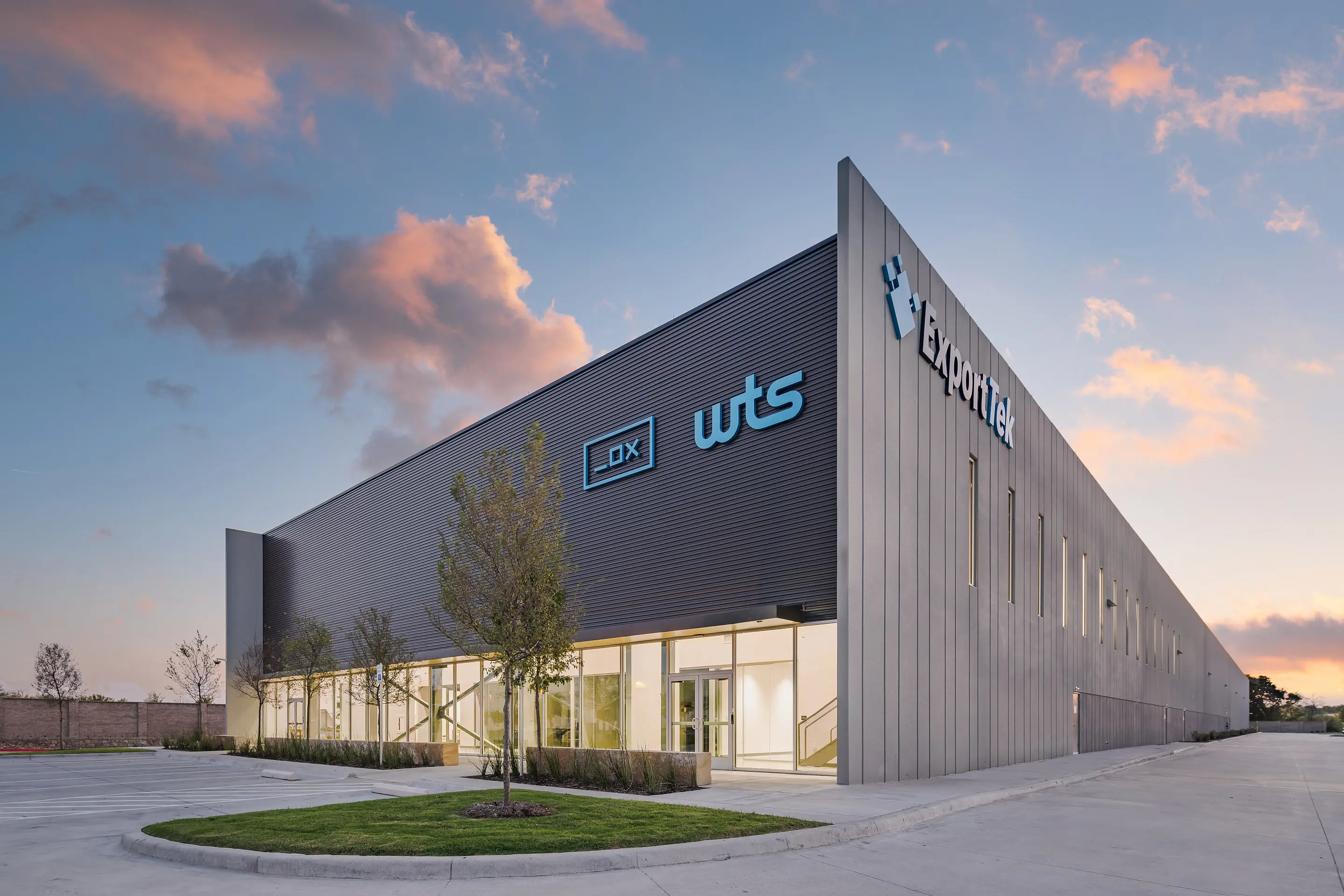
Our Lewisville facility sits roughly twenty minutes from DFW International Airport, with daily carrier collection at our own dock and both LTL and FTL freight options; Canadian programmes run the same way into London, Ontario. For a consolidating programme, that geography is a real line item rather than a talking point.
FAQ
Questions about collection and transport
Do you provide packaging?
How do you handle devices that never come back?
Can you collect internationally?
What about lithium batteries?
How fast can you collect?
Do you consolidate before processing?
Can you integrate with our systems?
Scope your distributed recovery program.
Sites, departing employees, quantities, deadlines and the systems the evidence has to land in. That is enough to design the program rather than quote a rate.