
Services · Facility & Site Closure
The building has to be empty by a date. The technology in it is the part nobody has a plan for.
Site closure is sold almost entirely by movers and furniture liquidators. They can clear a building. They cannot certify what happened to the data-bearing equipment that was in it — which is the only part of the job an auditor will ask about later.
Why this is its own service
Closure programmes fail in two places, and neither of them is the truck
The first is the building. Access windows, after-hours restrictions, freight elevator bookings, landlord notice periods and, in some buildings, labour rules decide whether a date is achievable. A programme priced without surveying those is priced against a schedule that will not hold. So does the circuit: most providers in this category subcontract the electrical work, which means the equipment is ready to come out and nobody on site that day can legally touch the plant it is connected to. We have a Master Electrician on staff and do that work ourselves.
The second is the record. A site that has been cleared is not the same as a site that has been accounted for.
Closing locations have the least reliable asset registers in an estate, because equipment moves between sites for years without anybody updating anything. That divergence surfaces at exactly the wrong moment — when someone is asked to confirm that every data-bearing device from a building that no longer exists was sanitized and certified.
This service is built around those two constraints. Our own national field crews do the removal inside the building's real access windows; every device is captured by serial at the point it is removed; and each site produces a closeout package that reconciles against what was found rather than against what the register claimed.
Seven phases
From a closure list to a reconciled programme record
Each site produces its own closeout package, and the programme record is those packages reconciled against one baseline.
- 01
Programme planning
A closure list is usually a spreadsheet from finance with dates on it. Turning that into a delivery plan means sequencing by geography and date, identifying which sites need survey and which do not, and agreeing what counts as done at each one.
ProducesProgramme plan and site schedule - 02
Site survey and asset capture
What technology is actually on site, and how much of it is on anyone's register. Closing sites are where the asset record is worst, because equipment has moved between locations for years without anybody updating anything.
ProducesPer-site asset list and variance report - 03
Scheduled removal
Removal by our own national technical field crews, inside the building's access windows — after hours, freight elevator bookings, loading dock slots and landlord notice periods included. The constraint is usually the building, not the equipment.
ProducesCustody transfer at the point of removal - 04
Custody and transport
Manifested, sealed and moved under an unbroken custody record into our R2v3 and RIOS certified facility in Lewisville, Texas, with reconciliation against the site list at receiving rather than at closeout.
ProducesOutbound manifest, chain-of-custody receipt - 05
Sanitization and certification
Every data-bearing device sanitized against NIST 800-88 Revision 2 by media type, with a certificate issued per serial carrying method, operator, station, timestamp and validation hash. An asset without a passing record cannot advance.
ProducesPer-device erasure certificate - 06
Disposition and recovery
Testing, grading and placement for what has a market, parts harvesting for what is worth more as components, and consignment to qualified certified downstream recyclers for the residual.
ProducesGrading record and disposition decision - 07
Per-site and programme closeout
A closeout package per site — photographic evidence of the cleared area, the reconciled asset list, certificates, weight tickets and downstream manifests — and one reconciled record across the whole programme.
ProducesSite closeout packages and programme reconciliation
What the category gets wrong
Four things that decide whether a closure programme holds up
The movers take the furniture. The technology is a different job.
Search for site closure services and almost everything that comes back is a commercial mover or a furniture liquidator. They are good at clearing a building and they are not certified processors, they do not sanitize data-bearing devices, and they do not issue certificates. The desks and the chairs do not carry breach risk. The server in the comms room, the laptops in the drawer and the switch above the ceiling tile do.
Closing sites have the worst asset records in the estate
Equipment migrates between locations for years without the register catching up. By the time a site is closing, what is physically there and what is recorded as being there have diverged — which is precisely when somebody is asked to certify that everything was accounted for. Capture at removal, per serial, is the only version of that certificate that survives being questioned.
The clock is a lease, and the penalty sets the price
The reason a closure programme gets funded is not the disposition value. It is the holdover rent, the make-good obligation or the contract penalty that lands if the site is not clear by a date. That makes certainty the product being bought — and it is why sequencing, access-window planning and a per-site definition of done matter more than the rate card.
At programme scale, reporting is the deliverable
One site is a job. Two hundred sites is a reporting problem: which are done, which are scheduled, which slipped and why, and one reconciled record for the auditor at the end. Field crews without a certified disposition chain cannot produce that. Certified processors who subcontract the crews cannot control it.
Scope
Confirmed capability, and the one thing we do not offer at all
Four of these five rows are work we perform ourselves, including the electrical work most providers in this category subcontract. The fifth is work we do not do at all. Naming that is the difference between a scope statement that survives your diligence and one that produces an argument on site.
- Confirmed today — programme delivery
- Programme planning and sequencing, site surveys, scheduled removal by our own national technical field crews, and technical project management across a multi-site closure. This is WesternTechSystems Technical Services, under a written scope statement agreed before dates are booked.
- Confirmed today — custody and sanitization
- Serialized asset capture at the point of removal, chain of custody, secure receiving, and NIST 800-88 Revision 2 sanitization of every data-bearing device with a certificate issued per serial. Performed in our own R2v3 and RIOS certified facility.
- Confirmed today — disposition and closeout
- Testing, grading, placement through established channels, parts harvesting, and a per-site closeout package reconciled against the site asset list. Residual material is consigned to qualified, certified downstream recyclers under our R2v3 Appendix A downstream vendor management scope — the physical recycling is performed by those vendors, not by us.
- Confirmed today — electrical work, in house
- Disconnecting and reconnecting UPS, PDU and generator plant, and the electrical work that goes with removing technology from a site, is performed by our own people under a Master Electrician on staff, and it is insured. Most providers in this category subcontract it, which is the most common reason a closure date slips — the equipment is ready to come out and the circuit it sits on cannot legally be touched by anyone on site that day. Where a jurisdiction requires a locally licensed contractor of record, we say so at scoping and name who holds it.
- Not offered — furniture, fixtures and make-good
- Furniture liquidation, fixture removal, demolition and general make-good are outside our scope. Many closure programmes need both halves, and where that is the case we will work alongside the furniture or general contractor rather than claiming their scope. We would rather be one accountable party for the technology than a nominal single point of contact for a job we subcontract most of.
Where the equipment goes
One certified facility, not a chain of intermediaries
Received against the site list
Reconciliation happens at receiving, against the asset list captured at that specific site — so a discrepancy is found while the site's crew can still be asked about it, rather than at closeout weeks later.
Certified per device, not per site
Sanitization is selected against NIST 800-88 Revision 2 by media type and certified per serial, carrying method, operator, station, timestamp and validation hash. A site-level certificate is not evidence about a device.
Processed in facilities we operate
Intake, sanitization, testing, grading, repair, packaging and remarketing happen inside a WesternTechSystems-operated facility — 70,000 sq ft in Lewisville, Texas, or our London, Ontario operation for Canadian programmes — both under R2v3 and RIOS certification, rather than in brokered third-party capacity. Residual material moves onward to qualified certified downstream vendors under manifest.
The variance report
The last chance to reconcile an estate before it stops existing
A closing site is the final opportunity to find out what was actually there. We report the difference between what your register expected and what our crews found — extras, missing items, and equipment that had migrated from a location that closed two years ago. For a lot of clients that report turns out to be more valuable than the recovery.
How our disposition process works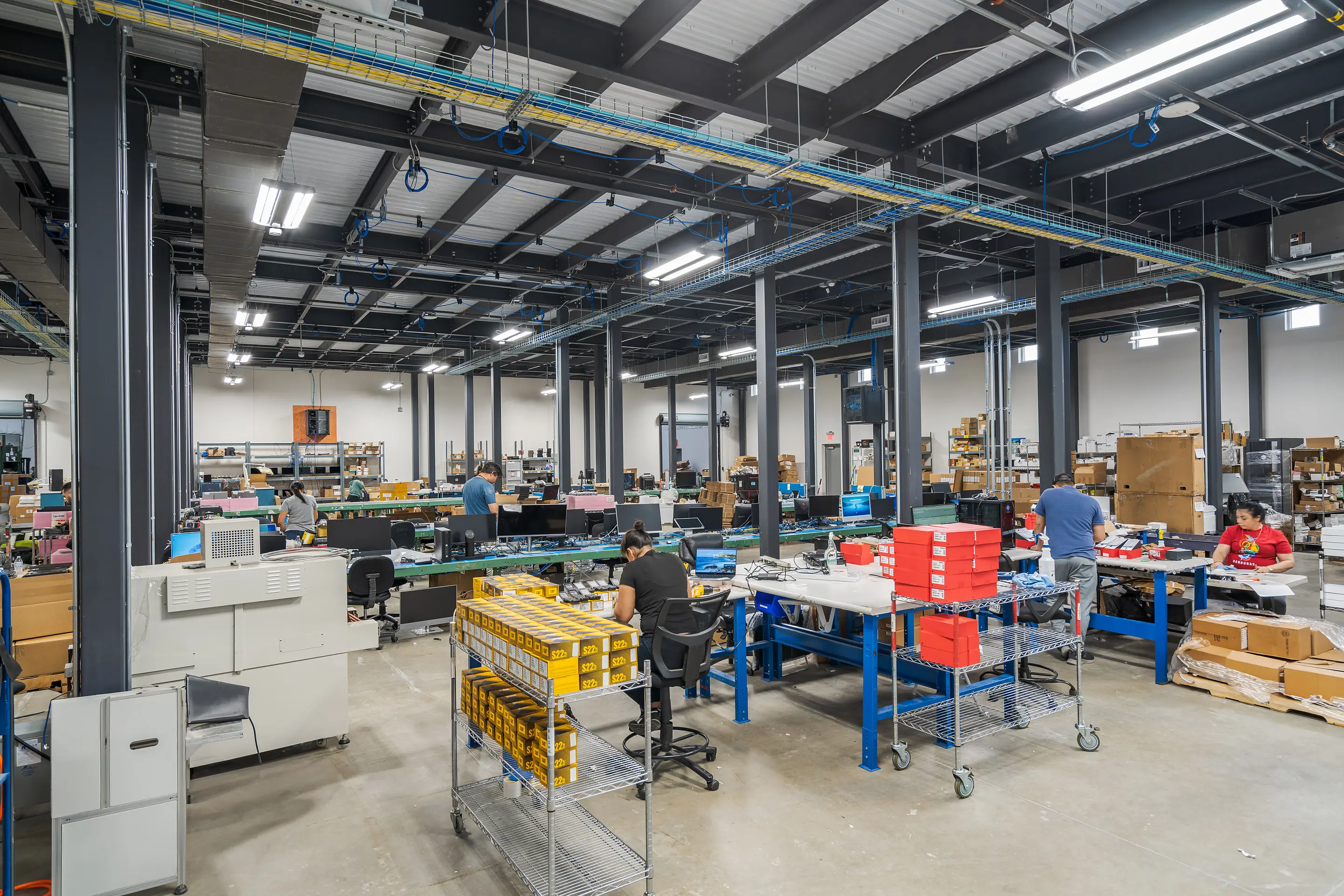
FAQ
What facilities, real estate and IT teams ask
We are closing sites. Why not just use the movers we already have?
How do you handle the sites that need electrical work?
What does a per-site closeout package contain?
Can you work to a lease surrender date?
What kinds of closure do you handle?
Our asset register is not accurate. Is that a problem?
Is there any value in what comes out of a closing site?
How do you report progress across a large programme?
What happens to equipment with no resale value?
How is this different from data center decommissioning?
Send us the closure list.
Sites, dates and roughly what is in each one is enough to start. We will tell you what is achievable against those dates and where the access constraints are going to bite.