
Services · Network Infrastructure Lifecycle
The switches are worth more than you were told. The configuration on them is riskier.
Retired network hardware recovers better than almost anything else leaving an enterprise refresh — and it carries credentials, keys and access control lists that most disposal routes never touch. Both facts are usually missed at the same time.
Why this is its own service
A network refresh generates two problems, and they are usually handed to two different people
The refresh itself gets planned properly. Somebody owns the new platform, the migration and the cutover. What happens to the equipment that comes out is a separate conversation, held later, usually with whoever has a truck.
That handoff is where both the value and the risk leak out.
The value leaks because network hardware placed into a broker pile realises a fraction of what the same equipment realises when it is graded and provenance-documented — and because a valuation quoted against manufacturer list price sets an expectation the licence position cannot support. The risk leaks because a device that has been factory reset looks clean and produces no record that anything was done to it.
This page is the disposition half of a network refresh, planned against the same end-of-support dates as the refresh itself. It uses the same field crews, the same serialized custody and the same certified facility as our data center and facility work — applied to an asset class that behaves differently enough to deserve its own scope.
Seven phases
From an end-of-support list to a per-serial settlement
Every phase produces a document, and the settlement reconciles against the inventory captured in your closets rather than against a count taken at our dock.
- 01
Estate and exposure assessment
What is installed, where, on what support status, and against which published end-of-support dates. The manufacturers publish those dates years ahead, which makes the refresh a schedule rather than a surprise — and makes the disposition side plannable at the same time.
ProducesInstalled-base and end-of-support exposure list - 02
Removal planning across sites
Network hardware does not sit in one room. It sits in closets across every branch, floor and site, behind access windows and change controls. Sequencing that is the part most disposition vendors treat as the customer's problem.
ProducesSite-by-site removal schedule - 03
De-installation and serialized capture
Our national field crews remove the equipment and record every switch, router, access point, firewall, transceiver and module as an asset in its own right against your register — not as a carton count.
ProducesOpening inventory and variance report - 04
Custody and transport
Manifested, sealed and moved under an unbroken custody record into our R2v3 and RIOS certified facility in Lewisville, Texas. Reconciliation against the opening inventory happens at receiving.
ProducesOutbound manifest, chain-of-custody receipt - 05
Storage media sanitization
Removable and fixed storage media in network equipment — compact flash, USB and SSD modules in chassis switches, routers and appliances — sanitized against NIST 800-88 Revision 2 by media type, with a certificate issued per serial.
ProducesPer-device erasure certificate - 06
Provenance, testing and grading
Serial validation and provenance screening, then testing and grading on what can actually be established for that platform. Both matter more on network hardware than on servers, and the reason is set out below.
ProducesGrading record and provenance file - 07
Placement and settlement
Placement through established channels, parts harvesting where a platform is worth more as modules, and consignment to qualified certified downstream recyclers for residual. Settlement reported per serial.
ProducesCertificate of Value Recovery
What makes this asset class different
Four things that change the number and the risk
Network gear holds residual value better than servers
A five-year-old switch still switches. Function is largely software-defined, the installed base is enormous and long-lived, and manufacturer list prices are high relative to build cost. That combination means retired network hardware frequently carries more recoverable value, per unit of weight, than the server estate retired alongside it — and it is far more often thrown away.
But the licence, not the hardware, sets the ceiling
Subscription and feature licences frequently do not transfer to a second-hand buyer. A valuation quoted against manufacturer list price therefore overstates what the equipment will realise, sometimes badly. We value against what a licensed buyer will actually pay for that platform, which produces a lower first number and a settlement that matches it.
Provenance is a bigger issue here than anywhere else in IT
The secondary market in network hardware has a counterfeit problem that the server market largely does not, and federal prosecutions have followed. A buyer's first question is where the equipment came from. Per-serial capture from the point of removal, with parent-component lineage where modules are harvested, is the answer to that question — and it is why provenance is a phase on this page rather than a footnote.
The end-of-support calendar is published years in advance
Manufacturers publish end-of-sale and end-of-support dates for every platform. Security has become a co-signer on those decisions, because unsupported firmware now shows up as an audit and cyber-insurance finding rather than as technical debt. That means the refresh date is known — and so is the date the old estate becomes somebody's problem.
Scope
Confirmed capability, and the parts we are explicit about not claiming
Two of the five rows below are things we do not do. They are on the page because a scope statement that omits them fails during diligence, and because on this asset class the omissions are where buyers get misled.
- Confirmed today — removal and field execution
- Site surveys, removal planning across distributed sites, de-installation by our own national technical field crews, and serialized capture at the point of removal. This is WesternTechSystems Technical Services, under our own project management and against a written scope statement.
- Confirmed today — custody and storage-media sanitization
- Serialized inventory, chain of custody, secure receiving, and NIST 800-88 Revision 2 sanitization of the storage media in network equipment with a certificate issued per serial. Performed in our own R2v3 and RIOS certified facility.
- Confirmed today — recovery
- Serial validation and provenance screening, testing and grading to the level our current capability supports, parts and module harvesting, placement through established channels, and a Certificate of Value Recovery per serial. Residual material is consigned to qualified, certified downstream recyclers under our R2v3 Appendix A downstream vendor management scope — the physical recycling is performed by those vendors, not by us.
- Deliberately not claimed — on-board configuration memory
- Removable and fixed storage media in network equipment are sanitized to NIST 800-88 Revision 2 and certified per serial. On-board configuration memory is a different component, and no published standard defines a sanitization procedure for it — a factory reset is not sanitization to a standard, whatever a disposal vendor calls it. We do not claim a certified process for something no standard defines. What we do instead is tell you in writing which components on each platform carry a certificate and which do not, so your compliance file reflects what actually happened.
- Deliberately not claimed — manufacturer authorisation and licensing
- We are not an authorised technology provider or service partner for any network manufacturer, we do not hold their architecture specialisations, and we cannot relicense or transfer manufacturer software to a second-hand buyer. Where a project needs any of those, it needs the manufacturer or one of its authorised partners, and we will say so at scoping. We would rather lose a line of scope than misrepresent what our certifications cover.
Certificate of Value Recovery
What each device returned, recorded against its serial
A network refresh generates hundreds or thousands of individually identifiable devices spread across dozens of sites. Reporting the recovery as one figure makes it impossible to check whether the branch gear was accounted for at all.
The Certificate of Value Recovery is designed to make value recovery auditable at the asset level rather than presenting only a pooled settlement total. It can document disposition outcome and gross recovery per serial, each figure marked observed or allocated, the allocation methodology named where one was applied, and harvested-module proceeds attributed back to the parent chassis. It evidences commercial outcome only — sanitization is certified separately, per device.
Opens a PDF in a new tab. Marked SPECIMEN · NOT AN ISSUED CERTIFICATE and populated with sample data.
Where it goes next
Graded, documented, and placed as equipment rather than weight
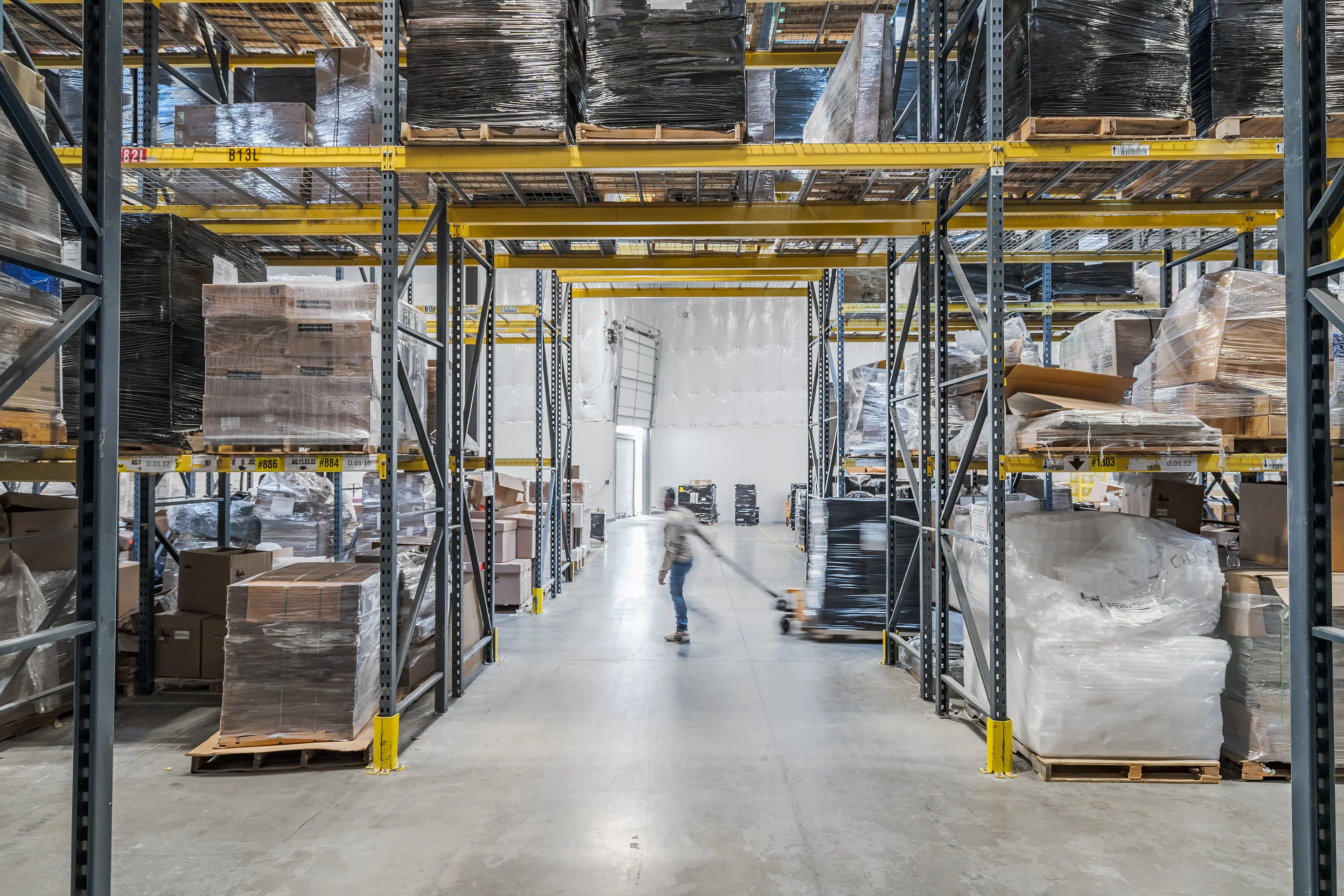
Equipment arrives into a 70,000 sq ft certified facility with 1,500 pallet positions of climate-controlled racking, is sanitized and graded on our normal processing flow, and is placed through channels that buy documented equipment rather than undocumented lots. Modules worth more separately are harvested, and the lineage back to the parent chassis is kept.
How asset recovery and remarketing worksFAQ
What network and security teams ask
What is this worth? We were told the old switches are scrap.
Is a factory reset enough before disposal?
How do you handle serial validation and provenance?
Do you send your own people, or subcontract the removal?
Are you an authorised Cisco, Juniper or Aruba partner?
Can you time this against our end-of-support dates?
What about the access points and the small branch gear?
Do you buy the equipment or share the proceeds?
What happens to equipment with no resale value?
How do we verify what each device actually returned?
Send us the model list.
Platform, quantity, site count and rough support status is enough for a real valuation — including which platforms we would tell you not to bother moving.