
Skip to content
The glazed office frontage of the WesternTechSystems facility at blue hour

Services

A lifecycle is only real if the record is continuous

Most organizations buy each stage separately and discover at retirement that no single asset record survived the handoffs. Lifecycle management is the discipline of never letting that record break.

Why it matters

Fragmentation is cheap per stage and expensive at audit

Procurement goes to one vendor, imaging to another, field support to a third, and disposal to whoever quotes lowest. Each contract looks efficient in isolation. The cost appears years later, when someone has to prove what happened to a specific serial number and the answer is spread across four systems that were never reconciled.

The gaps between vendors are exactly where untracked data-bearing devices live.

A single accountable provider is not simply more convenient. It means the asset record is written once, continuously, by the party physically handling the equipment — so retirement is a lookup rather than an investigation.

The lifecycle

Six stages, one record

  1. 01

    Acquire

    Procurement against your standards, with disposition economics considered at purchase rather than discovered at retirement.

  2. 02

    Deploy

    Configuration, imaging, asset tagging, MDM enrollment and kitting, so equipment arrives ready to work.

    Explore
  3. 03

    Operate

    Support, repair, warranty coordination and hot-swap, keeping fleets productive through their useful life.

    Explore
  4. 04

    Refresh

    Planned replacement with collection of the outgoing fleet handled as one coordinated movement.

    Explore
  5. 05

    Recover

    Testing, grading and remarketing to return value from equipment that still has a market.

    Explore
  6. 06

    Retire

    Verified sanitization and certified disposition, with the evidence package your auditors need.

    Explore

What continuity produces

The asset record is the deliverable

Every stage writes to the same record: what was bought, how it was configured, who held it, when it came back, what condition it was in, how it was sanitized, and where it finally went.

That record is what lets an auditor trace one device end to end. It is also what lets a resale buyer trust the provenance of a graded machine — which is why the same discipline that satisfies compliance also protects recovery value.
How chain of custody actually works
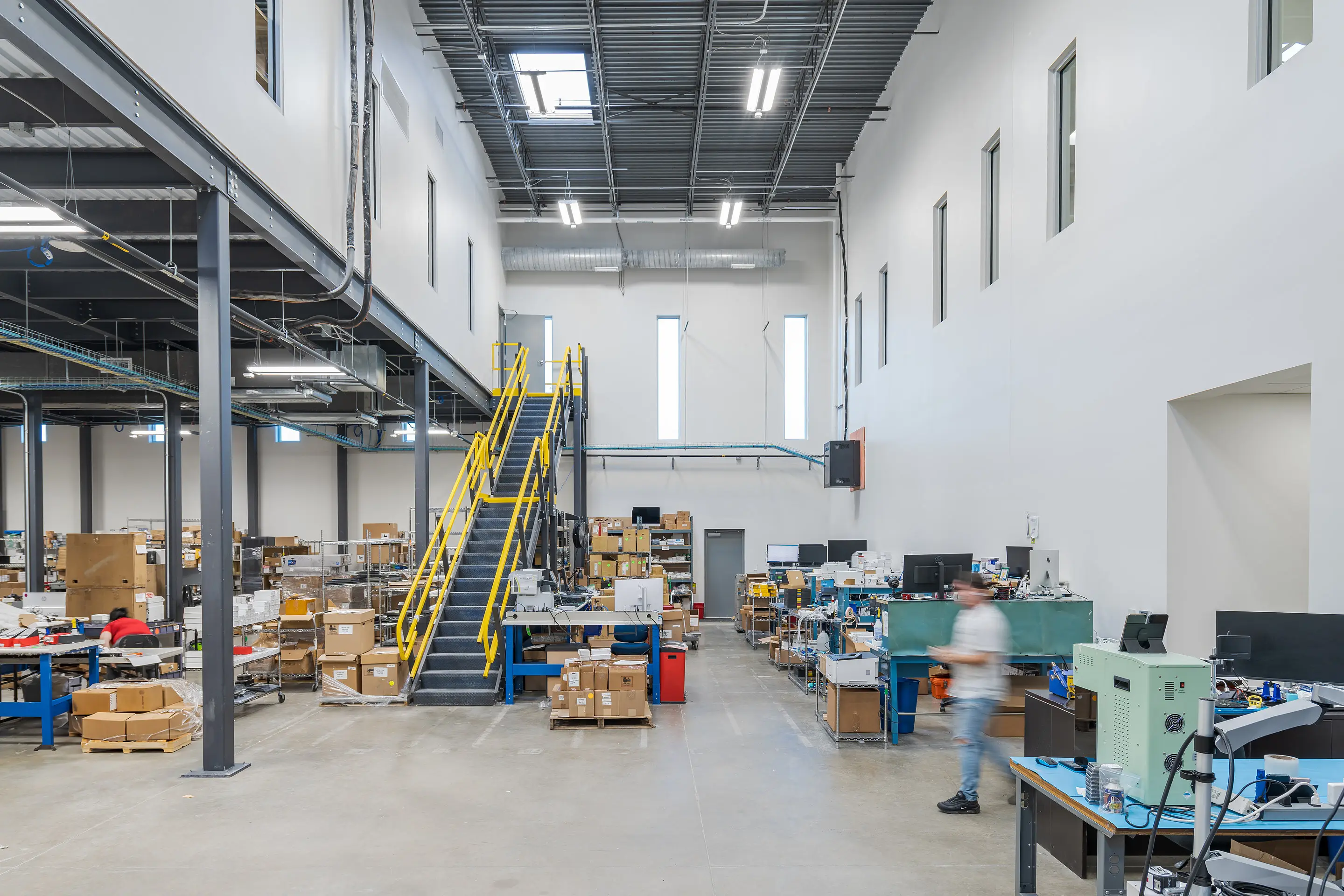
Processing floor at the WesternTechSystems facility viewed from the mezzanine

FAQ

Questions about lifecycle management

How is lifecycle management different from ITAD?
ITAD is the retirement end of the lifecycle — sanitizing, disposing of and recovering value from equipment you are finished with. Lifecycle management covers the whole span: what you buy, how it is configured and deployed, how it is supported, when it is refreshed, and what happens at the end. ITAD done well is a stage inside lifecycle management. Lifecycle management done well makes ITAD cheaper and less risky, because the asset record starts on day one rather than being reconstructed at disposal.
How is it different from ITAM?
ITAM — IT asset management — is the discipline and usually the software: the register, the licences, the contracts, the reporting. It is how you know what you own. Lifecycle management is the operational execution around that register: physically procuring, configuring, shipping, supporting, collecting and retiring the assets ITAM tracks. They are complements. A good lifecycle provider writes back into your ITAM system rather than maintaining a competing set of records.
Why not manage each stage separately?
Because the evidence chain breaks at the handoffs. When procurement, deployment, support and disposal sit with four vendors, nobody owns the asset record end to end — so at retirement you are reconciling four partial datasets, and the gaps between them are exactly where untracked data-bearing devices live. Fragmentation is cheap per stage and expensive at audit.
Can we adopt only part of it?
Yes, and most clients do. Many start at the retirement end because that is where the immediate risk sits, then extend backwards into refresh and deployment once the reporting proves useful. There is no requirement to hand over the whole lifecycle to get value from one stage of it.
What asset types can you manage?
Enterprise laptops and desktops, mobile devices and tablets, servers and storage, and networking equipment. Our facility has a dedicated mobile-device processing floor alongside general compute processing, which matters when a single refresh spans both.
How does this integrate with our existing systems?
Through APIs and EDI rather than spreadsheets. We run JSON webhooks with HMAC validation, EDI 810 and 214 transactions, and SFTP file exchange, with retries and idempotency so a failed message does not silently drop an asset. Integrations are scoped during onboarding against whatever your ITAM, ERP or ticketing stack actually is.
Does lifecycle management extend to AI and accelerated infrastructure?
It does, and the same principle applies: the retirement stage is cheap when the asset record never broke, and expensive when it did. Accelerated estates make that sharper, because the components inside one chassis carry very different sanitization requirements and very different residual values, and the equipment loses value quickly once it stops earning. See GPU and AI infrastructure lifecycle management.
What are the risks of not managing disposal properly?
The two that matter are an untracked data-bearing device, which is a potential reportable breach rather than an inventory discrepancy, and value destroyed by careless handling — equipment that could have been graded and resold arriving damaged enough to be scrap. Both are downstream consequences of a weak asset record, which is why the record is the thing worth investing in.

Start wherever the risk is.

Most clients begin at retirement and extend backwards once the reporting proves its worth. Tell us which stage hurts most.